Solar Staff • 2022-2025
Solar Staff — mobile platform rebuild and design system implementation
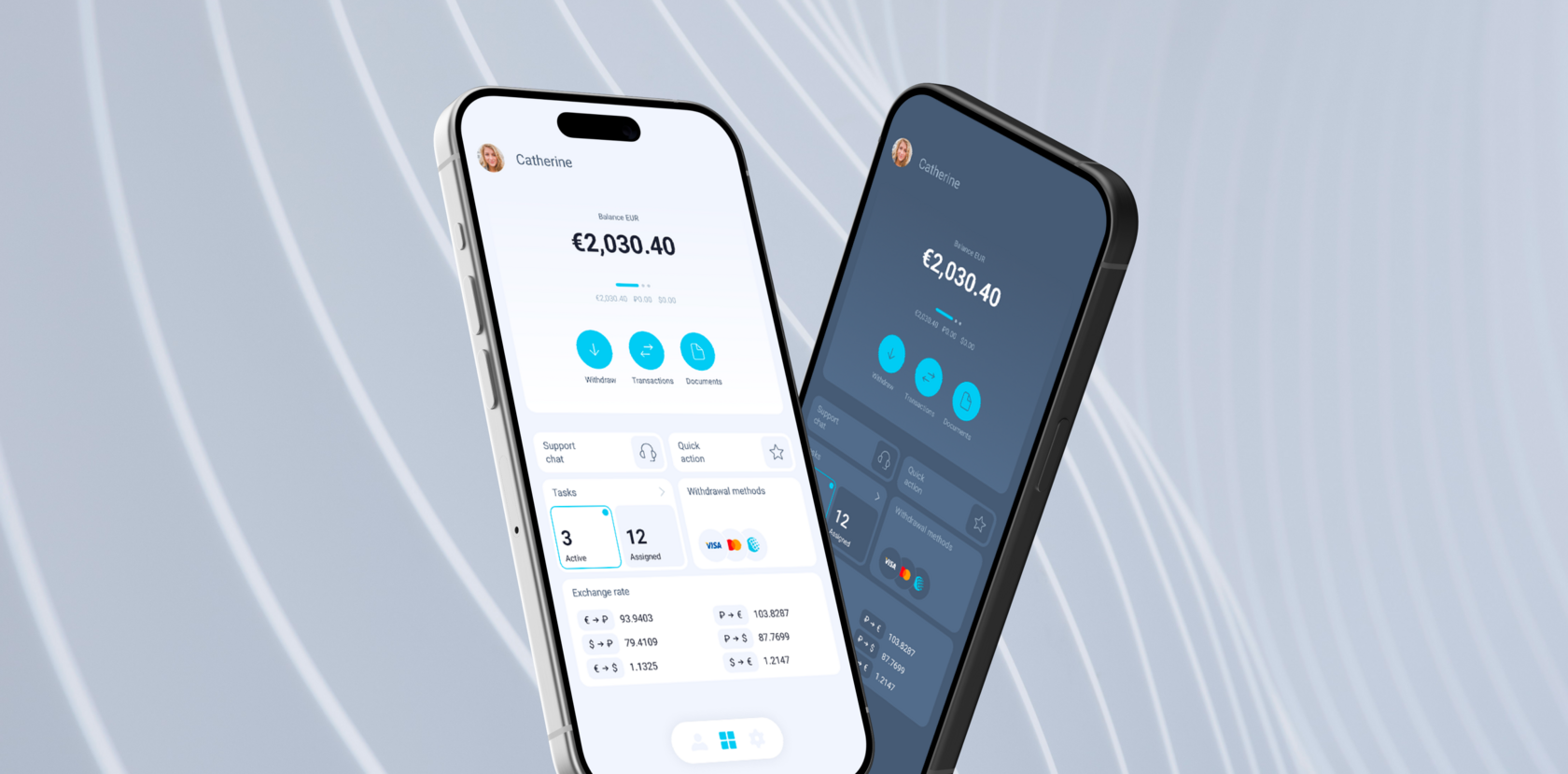
Project сontext
Solar Staff is a B2B fintech platform that simplifies contract management, compliance, and cross-border payments between businesses and freelancers, including individuals, self-employed professionals, and sole traders.
I joined in 2022 as a Senior Product Designer to establish a structured product design workflow within the IT team and lead the redesign and relaunch of the freelancer mobile application, transforming it into a scalable and user-centred digital product.
Solar Staff is a B2B fintech platform that simplifies contract management, compliance, and cross-border payments between businesses and freelancers, including individuals, self-employed professionals, and sole traders.
I joined in 2022 as a Senior Product Designer to establish a structured product design workflow within the IT team and lead the redesign and relaunch of the freelancer mobile application, transforming it into a scalable and user-centred digital product.
Product goals and objectives
-
Goals
- Deliver full feature parity between web and mobile by integrating the complete freelancer profile functionality into the mobile application.
- Establish a scalable design system to accelerate feature development and ensure product-wide consistency across platforms.
- Enable end-to-end user registration within the mobile app, reducing friction and improving acquisition and activation rates.
-
My responsibilyty
- Led the creation of a configurable and scalable design system aligned with brand guidelines, streamlining collaboration with engineering and reducing time-to-market for new features.
- Audited and restructured existing application flows, identifying gaps between web and mobile experiences and prioritising the implementation of missing core functionality.
- Owned pre-release validation, including usability testing, release checks, and structured design reviews to ensure quality and consistency before deployment.
- Established continuous feedback loops by collecting user insights and performance data to inform iterative product improvements.
- Partnered closely with Product Managers, proactively proposing UX-driven solutions to business challenges and shaping feature strategy.
User strategy and information architecture
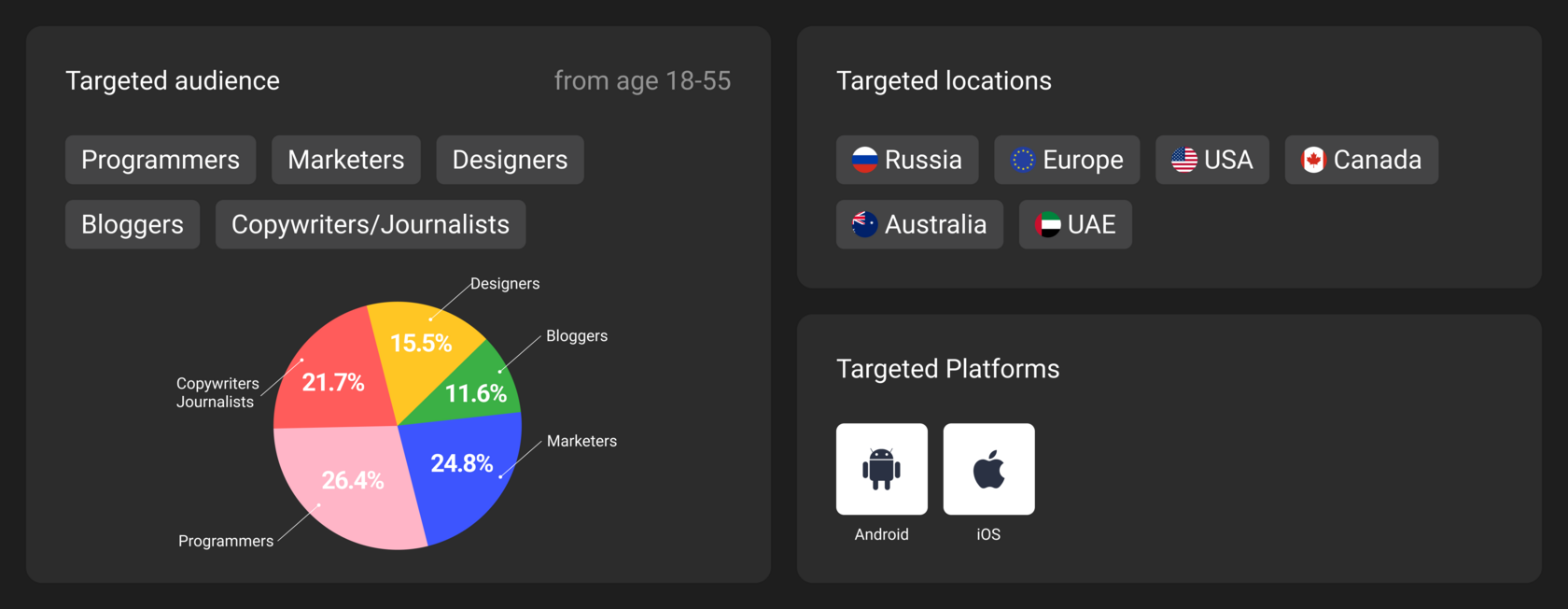
Defined and continuously monitored key user segments to ensure product decisions were aligned with real user needs and behavioural patterns. Integrated accessibility principles into the product design process, ensuring the application remained inclusive and compliant with accessibility standards.
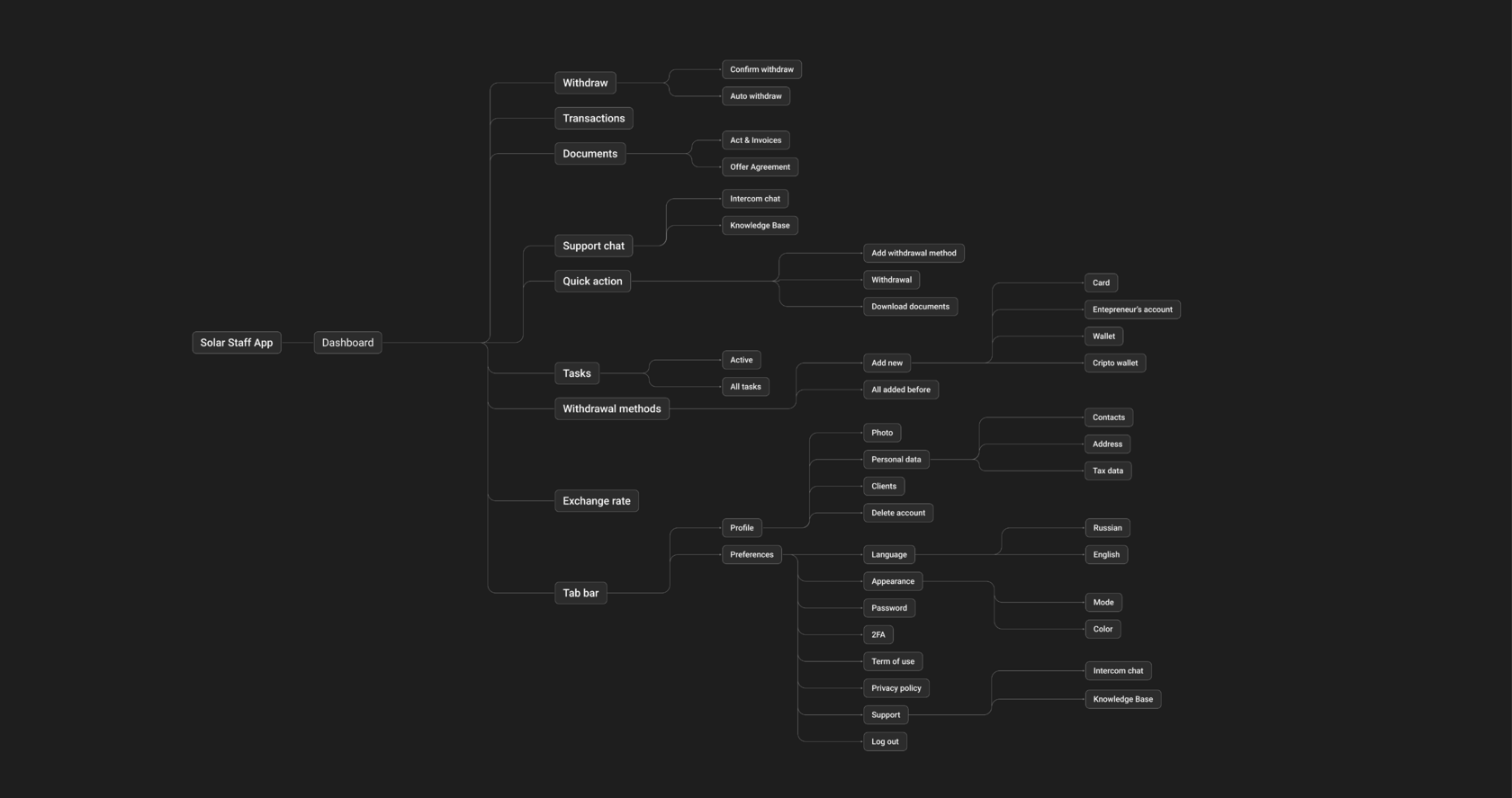
Designed the end-to-end information architecture for the mobile application, mapping and restructuring all web-based sections into a coherent, scalable mobile experience.
Defined and continuously monitored key user segments to ensure product decisions were aligned with real user needs and behavioural patterns. Integrated accessibility principles into the product design process, ensuring the application remained inclusive and compliant with accessibility standards.
Designed the end-to-end information architecture for the mobile application, mapping and restructuring all web-based sections into a coherent, scalable mobile experience.
Design System
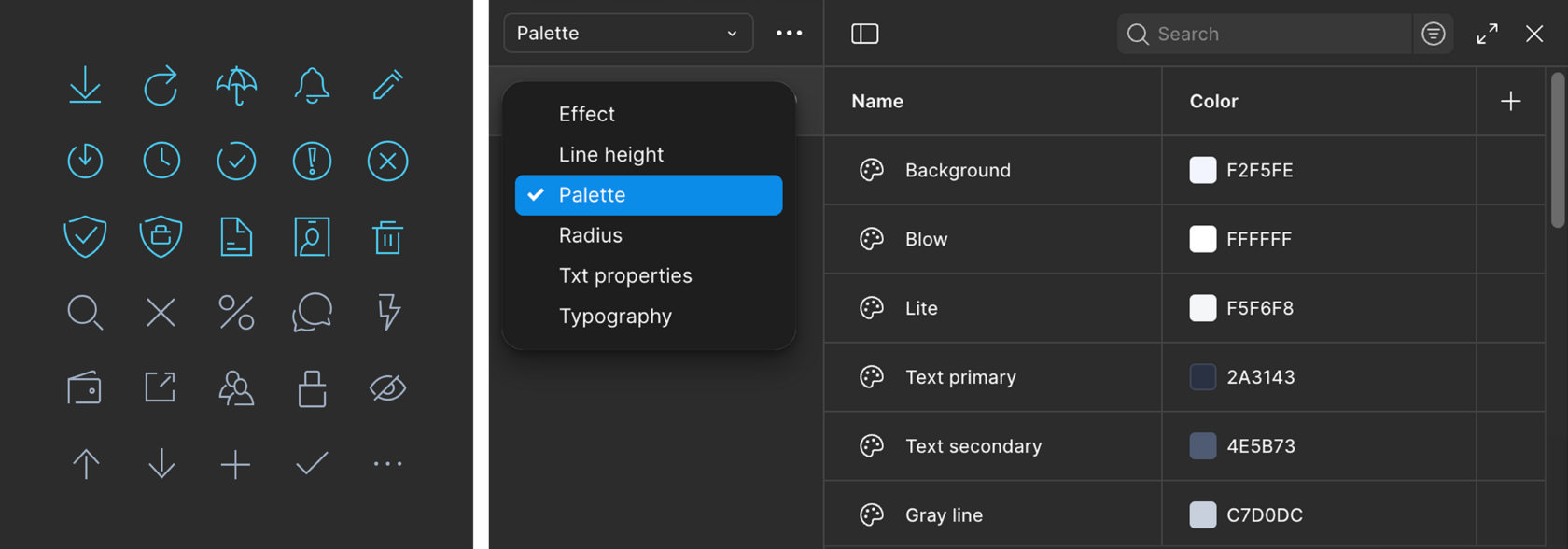
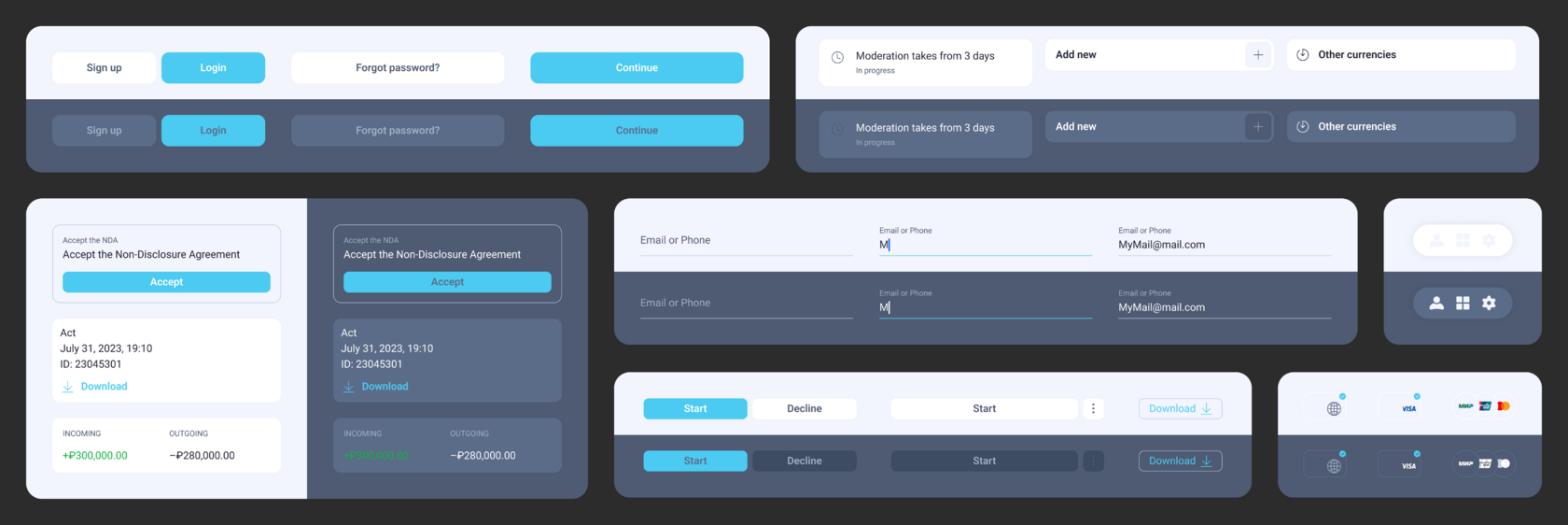
Established a scalable design system in Figma, defining reusable components, iconography, typography, and visual styles to ensure consistency across the product. Standardised the use of shared components within all feature mockups, streamlining collaboration with front-end engineers and QA teams and reducing implementation discrepancies.
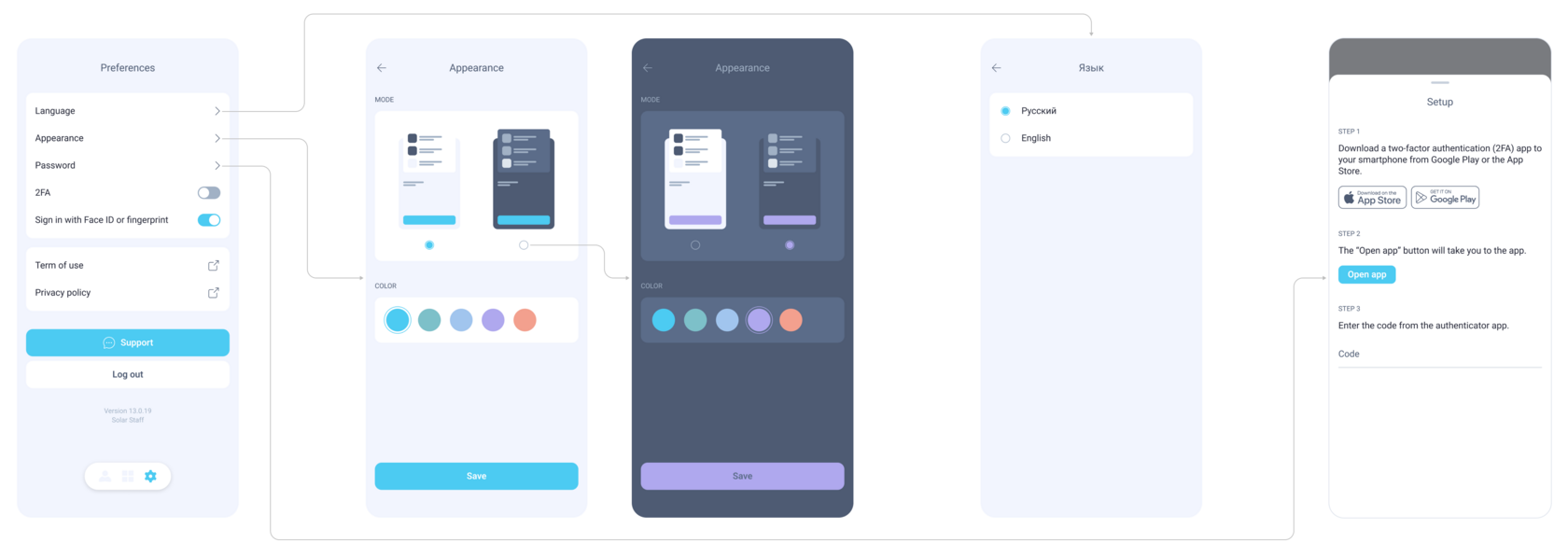
Introduced a dark theme and configurable accent colour settings, improving usability, personalisation, and visual flexibility across different user preferences and contexts.
Established a scalable design system in Figma, defining reusable components, iconography, typography, and visual styles to ensure consistency across the product. Standardised the use of shared components within all feature mockups, streamlining collaboration with front-end engineers and QA teams and reducing implementation discrepancies.
Introduced a dark theme and configurable accent colour settings, improving usability, personalisation, and visual flexibility across different user preferences and contexts.
Dashboard Experience
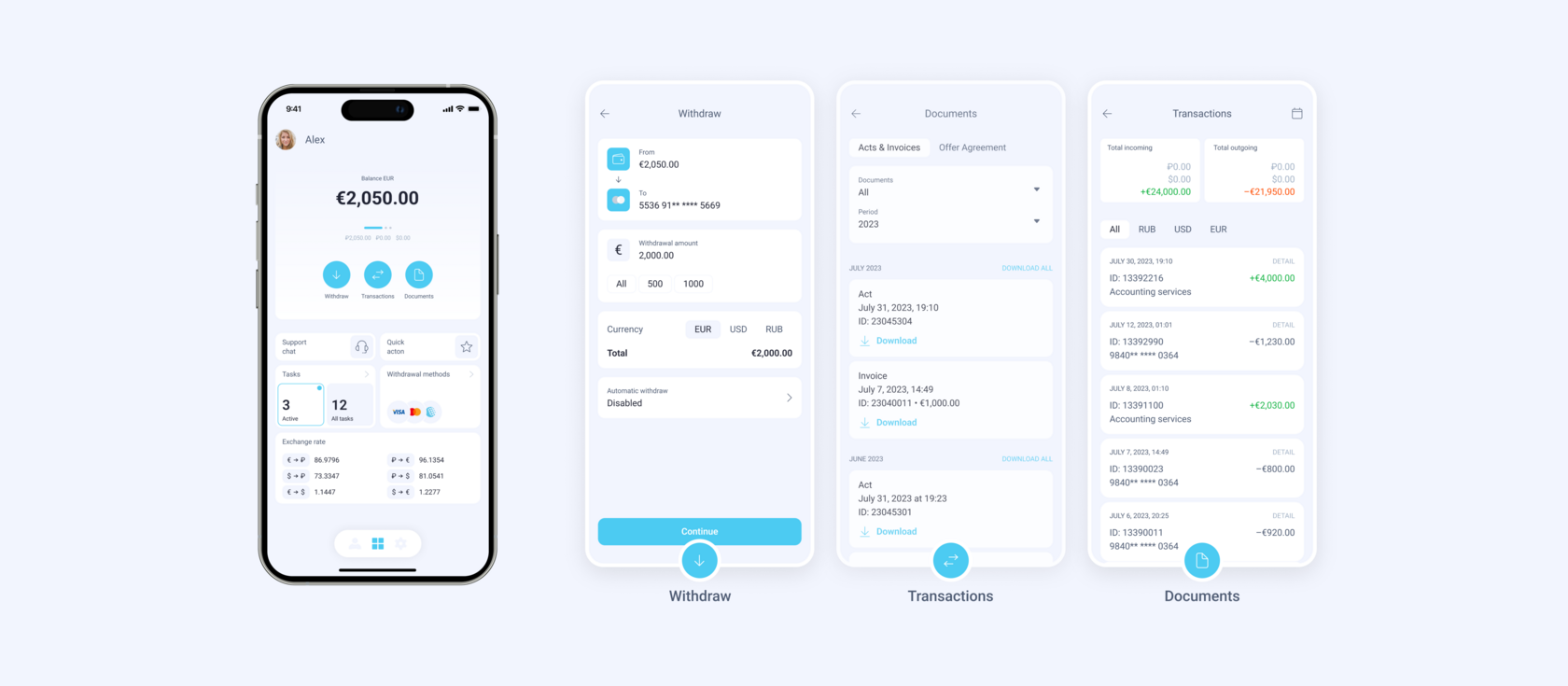
Designed a centralised dashboard to serve as the primary control hub for freelancers, providing immediate visibility into finances, active tasks, and withdrawal management. Structured the layout to prioritise key financial indicators and actionable items, reducing navigation time and improving task efficiency. Introduced contextual quick actions and direct access to support, enabling faster resolution of operational issues and improving overall user confidence within the platform.
Designed a centralised dashboard to serve as the primary control hub for freelancers, providing immediate visibility into finances, active tasks, and withdrawal management. Structured the layout to prioritise key financial indicators and actionable items, reducing navigation time and improving task efficiency. Introduced contextual quick actions and direct access to support, enabling faster resolution of operational issues and improving overall user confidence within the platform.
Withdraw flow
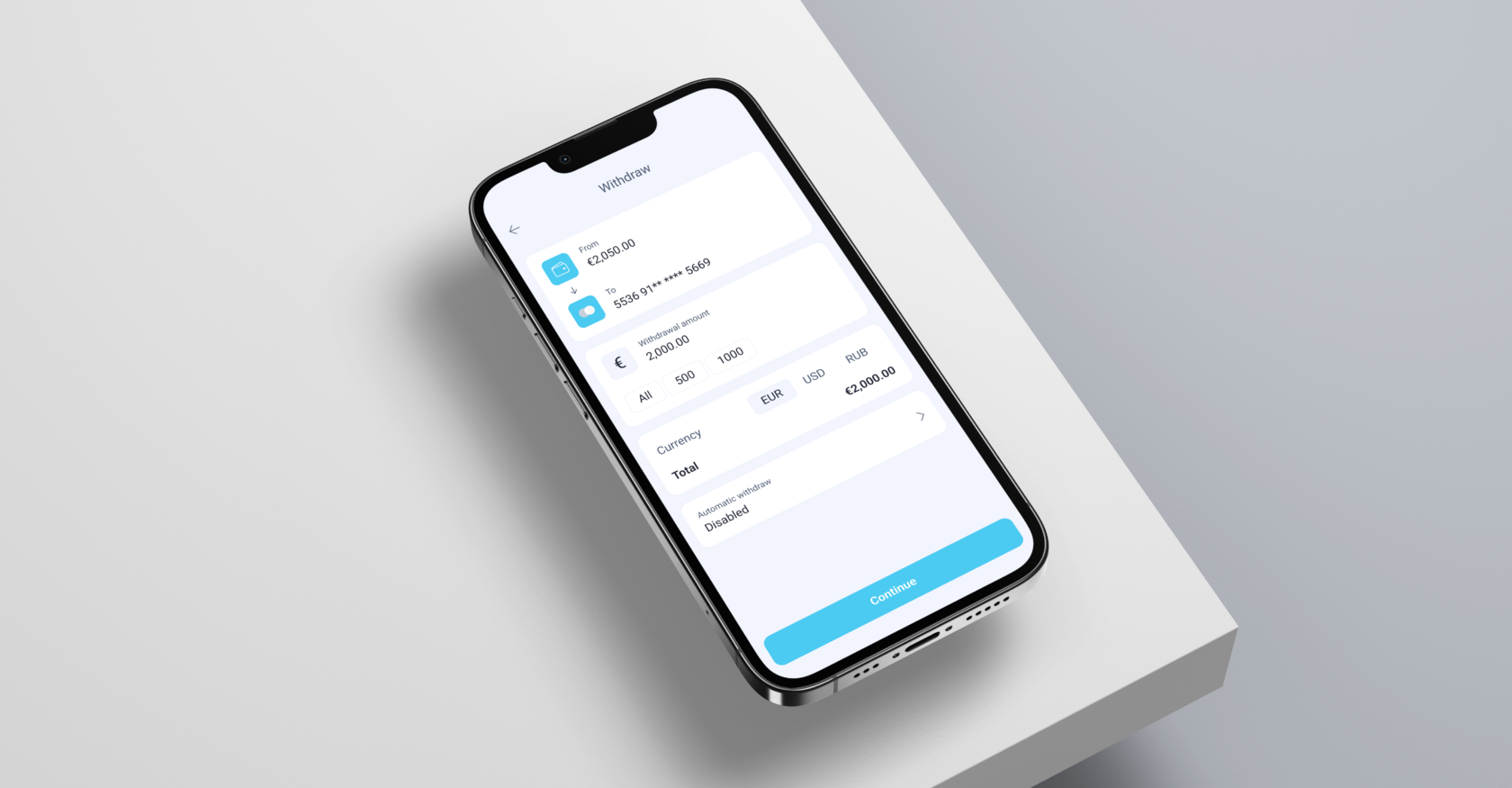
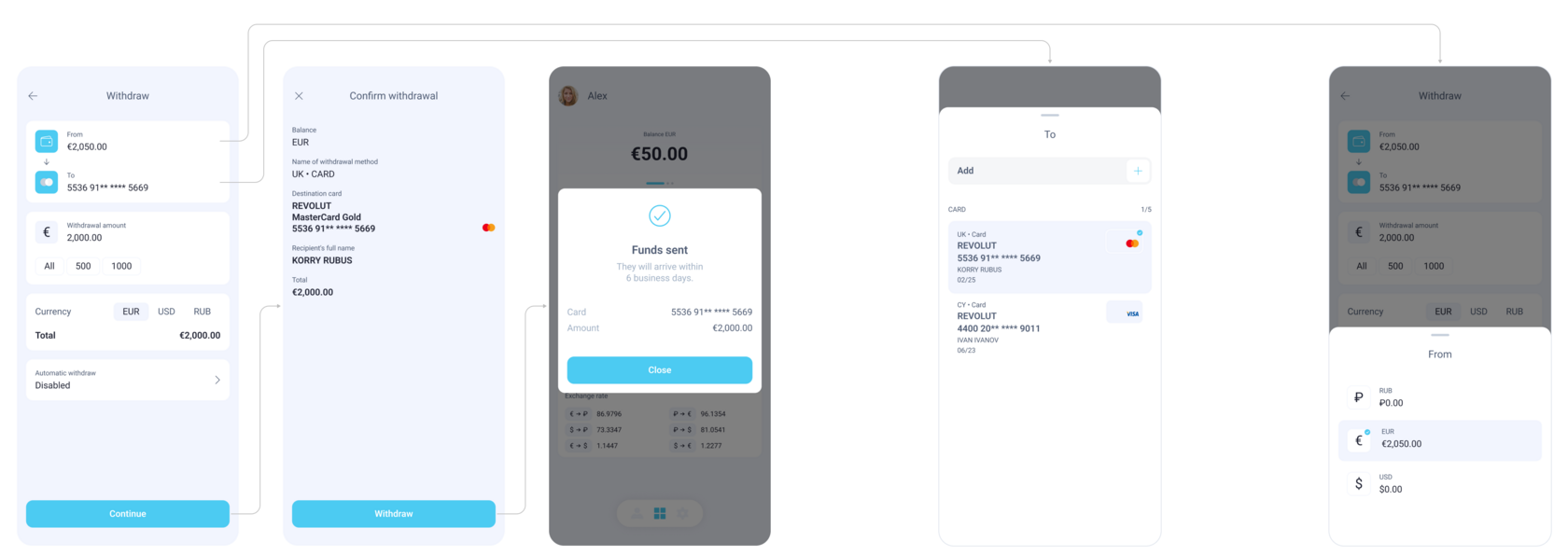
Designed and optimised the end-to-end withdrawal journey, one of the most critical financial flows within the freelancer application.
Structured the process to include balance selection, withdrawal method selection, fee visibility, and final payout amount calculation, ensuring transparency before confirmation.
Implemented a two-step verification flow with a dedicated review screen, allowing users to validate transaction details prior to submission, followed by a clear success state confirming completion. Developed comprehensive error handling and validation logic at the initial stage, including restrictions on unsupported cards and contextual error messaging to prevent failed transactions and reduce support requests.
Designed and optimised the end-to-end withdrawal journey, one of the most critical financial flows within the freelancer application.
Structured the process to include balance selection, withdrawal method selection, fee visibility, and final payout amount calculation, ensuring transparency before confirmation.
Implemented a two-step verification flow with a dedicated review screen, allowing users to validate transaction details prior to submission, followed by a clear success state confirming completion. Developed comprehensive error handling and validation logic at the initial stage, including restrictions on unsupported cards and contextual error messaging to prevent failed transactions and reduce support requests.
Profile and Preferences
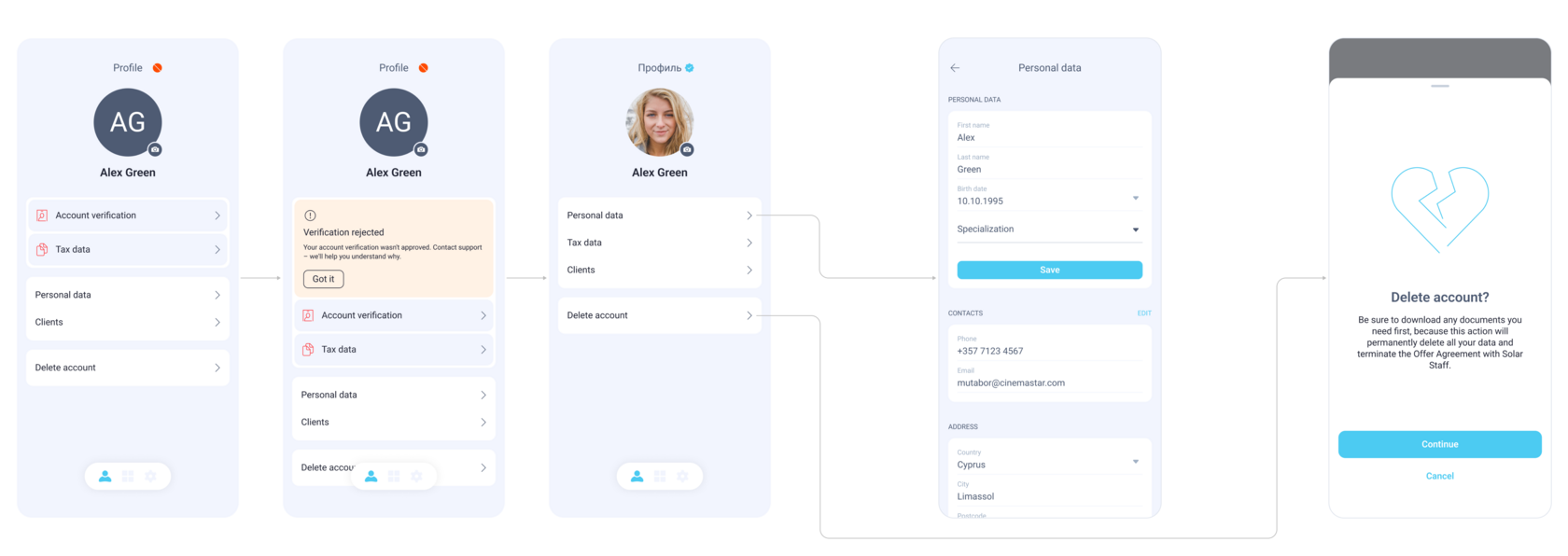
Restructured account management and application settings into a dedicated tab within the bottom navigation bar, improving discoverability and reducing cognitive load.
Consolidated profile data, preferences, and account management actions into a single, clearly structured area, enabling users to efficiently control their information and service settings. Aligned the structure with established mobile navigation patterns to ensure intuitive interaction and consistency across the application.
Restructured account management and application settings into a dedicated tab within the bottom navigation bar, improving discoverability and reducing cognitive load.
Consolidated profile data, preferences, and account management actions into a single, clearly structured area, enabling users to efficiently control their information and service settings. Aligned the structure with established mobile navigation patterns to ensure intuitive interaction and consistency across the application.
Tasks experience
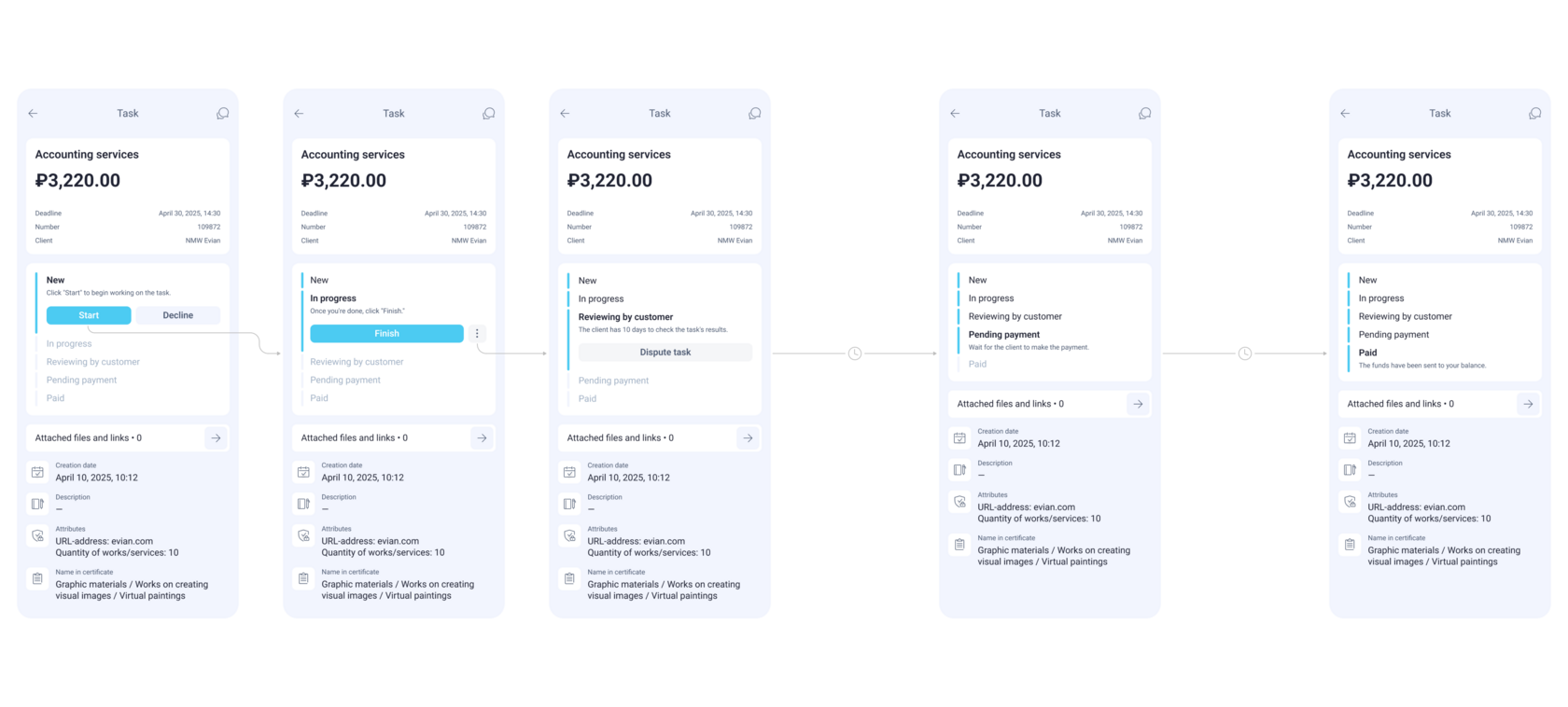
Iteratively redesigned the Tasks section based on continuous user feedback, usability testing, and release analysis, refining the experience across multiple product cycles.
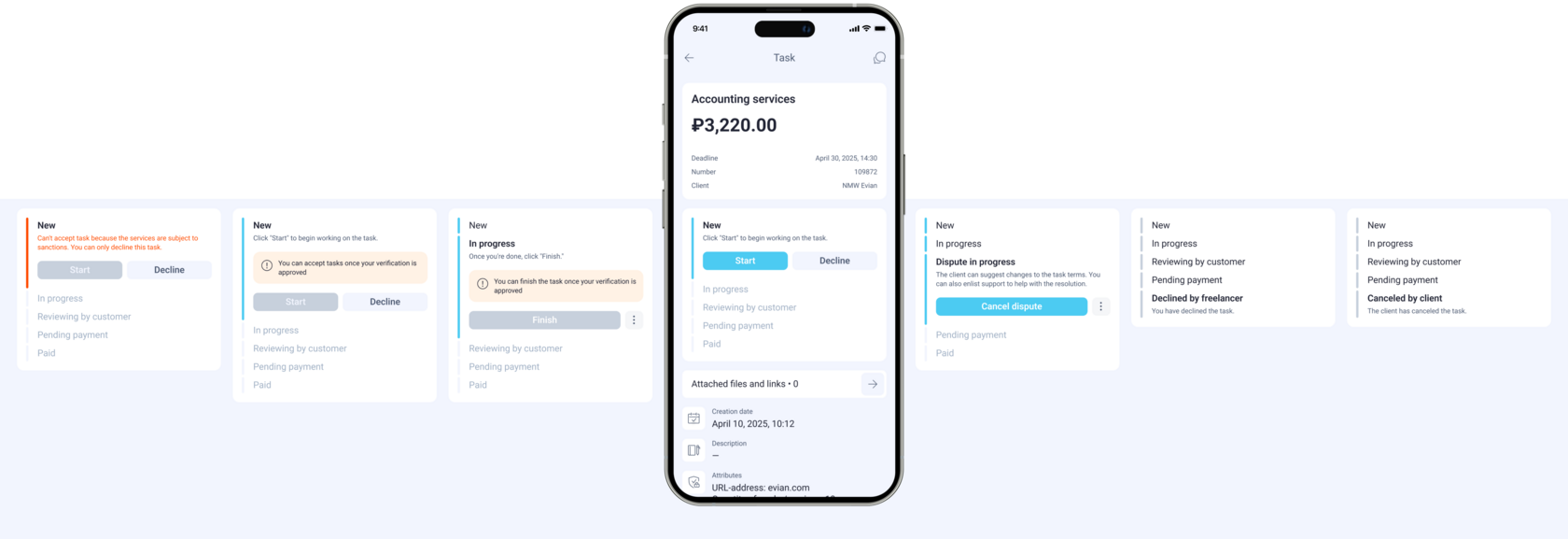
Introduced clear visual status indicators with contextual guidance, helping freelancers understand the current stage of each task and the required next action, reducing uncertainty and operational friction.
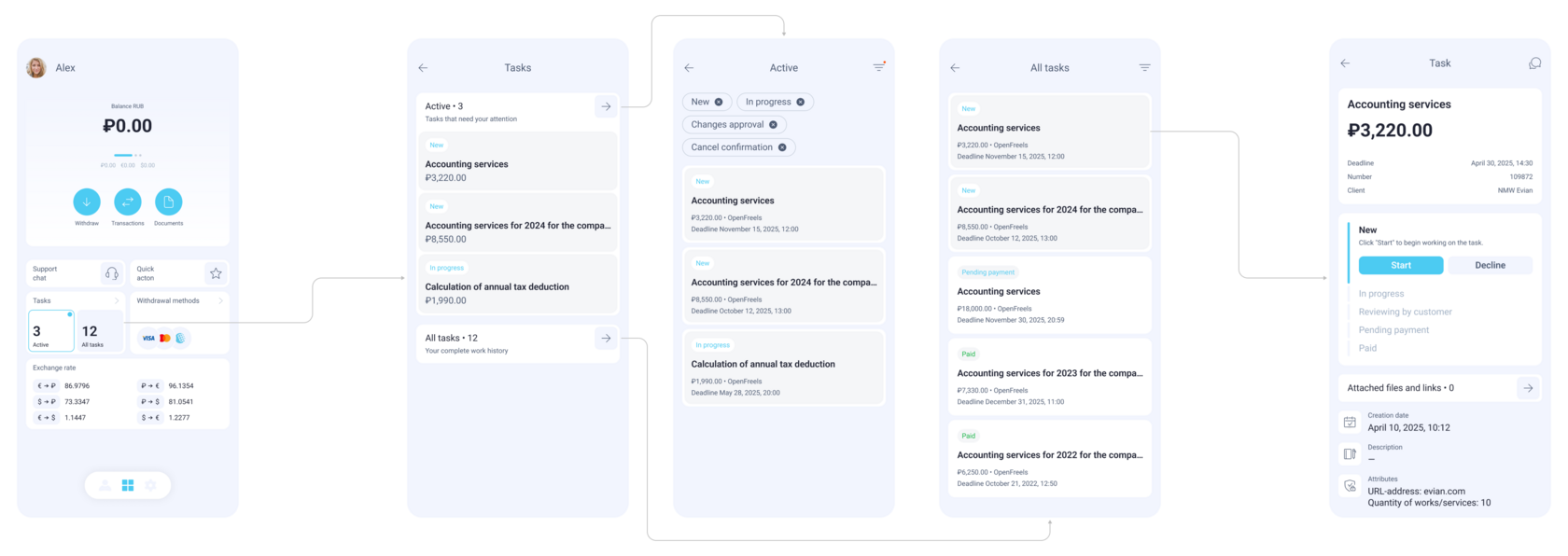
Restructured the task overview by separating active assignments from a consolidated archive of completed and paid tasks, improving clarity, navigation efficiency, and historical transparency.
Iteratively redesigned the Tasks section based on continuous user feedback, usability testing, and release analysis, refining the experience across multiple product cycles.
Introduced clear visual status indicators with contextual guidance, helping freelancers understand the current stage of each task and the required next action, reducing uncertainty and operational friction.
Restructured the task overview by separating active assignments from a consolidated archive of completed and paid tasks, improving clarity, navigation efficiency, and historical transparency.
The application demonstrated consistent month-over-month growth despite operating under an invitation-only registration model, reinforcing strong product-market fit and organic demand.
According to analytics data, the peak number of active users reached 72,287 in 2025. The platform recorded 3,275,096 total visits over the year, reflecting sustained engagement and recurring usage among freelancers.
The application is publicly available on both Google Play and App Store, supporting scalable distribution across major mobile platforms.
According to analytics data, the peak number of active users reached 72,287 in 2025. The platform recorded 3,275,096 total visits over the year, reflecting sustained engagement and recurring usage among freelancers.
The application is publicly available on both Google Play and App Store, supporting scalable distribution across major mobile platforms.
Key achievements
-
- Established structured design reviews within the IT workflow, improving design quality, cross-team alignment, and release consistency.
- Increased mobile adoption, with analytics showing the majority of users engaging through the app rather than the web platform.
- Built and scaled a unified design system, including dark mode support, ensuring consistency and faster feature delivery.
- Maintained structured Figma project architecture and up-to-date design documentation, reducing friction across design and engineering collaboration.
Next projects