Solar Staff • 2023-2026
Solar Staff — B2B platform transformation
Project context
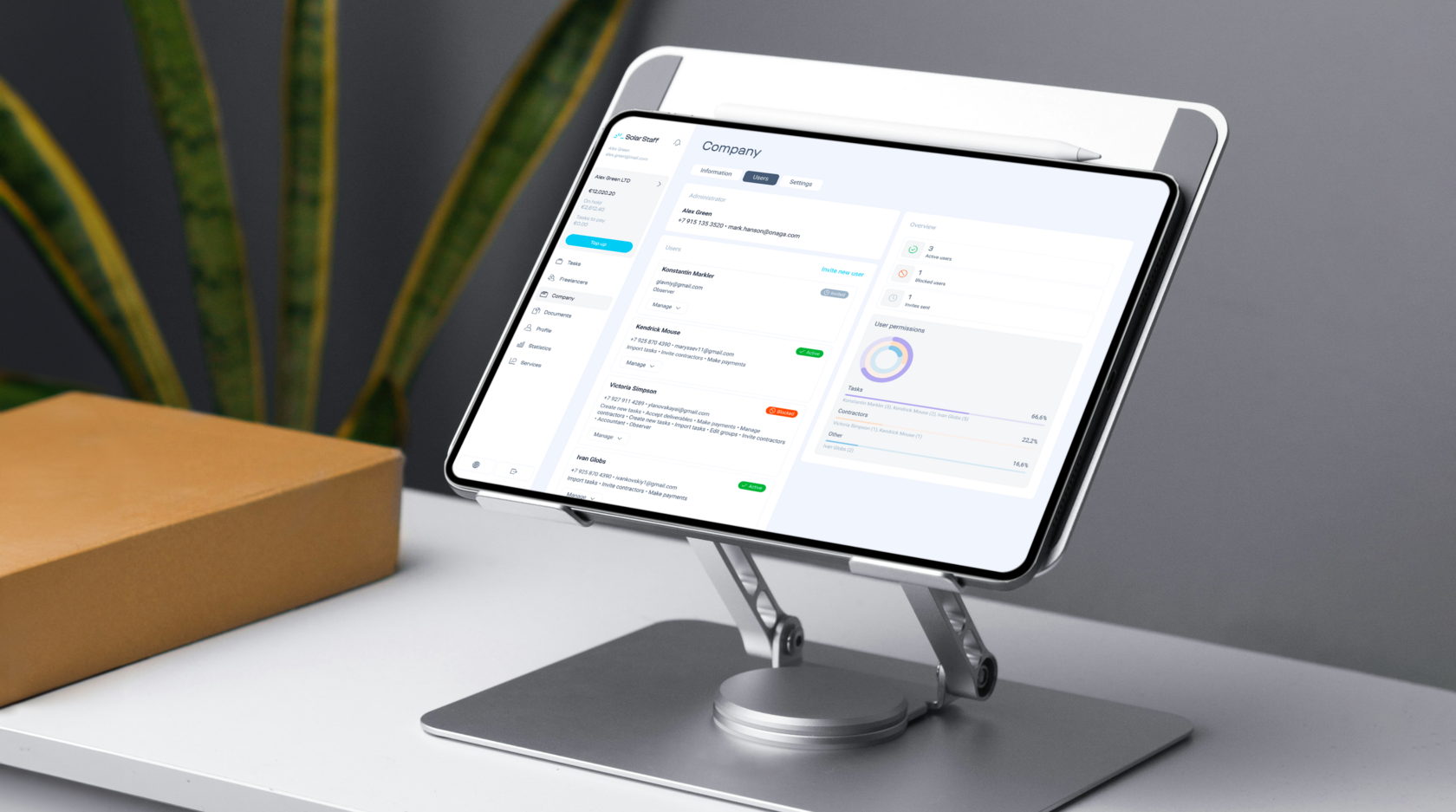
Solar Staff is a B2B fintech platform that manages contracts, compliance, and cross-border payments between businesses and freelancers. This case study focuses on the redesign of the customer web dashboard used by businesses to manage freelancers, documentation, task workflows, and financial operations.
I joined in 2022 as a Senior Product Designer to establish a structured design workflow and lead the end-to-end redesign of the customer account experience, improving usability, operational clarity, and scalability of the platform.
Solar Staff is a B2B fintech platform that manages contracts, compliance, and cross-border payments between businesses and freelancers. This case study focuses on the redesign of the customer web dashboard used by businesses to manage freelancers, documentation, task workflows, and financial operations.
I joined in 2022 as a Senior Product Designer to establish a structured design workflow and lead the end-to-end redesign of the customer account experience, improving usability, operational clarity, and scalability of the platform.
Product goals and objectives
-
Goals
- Audit the existing customer dashboard experience using product analytics and behavioural insights to identify usability gaps and operational inefficiencies.
- Redesign the customer dashboard to simplify daily workflows, improve task management, and increase platform adoption among business users.
- Accelerate feature delivery by introducing a scalable web design system to standardise components and reduce implementation time.
-
My responsibilyty
- Led discovery and analytics analysis for the customer platform, translating usage data and feedback into prioritised UX improvements.
- Established a scalable web design system for the customer interface, later extending its principles to the freelancer account to ensure cross-platform consistency.
- Redesigned the customer dashboard based on validated user feedback, improving clarity, navigation structure, and operational efficiency.
- Designed a flexible task management framework enabling businesses to customise workflows and manage contractor activity more effectively.
- Structured the product workflow within the team, implementing a product-driven process including goal setting, research, solution validation, testing, release management, feedback collection, and iterative planning.
Discovery and product analysis
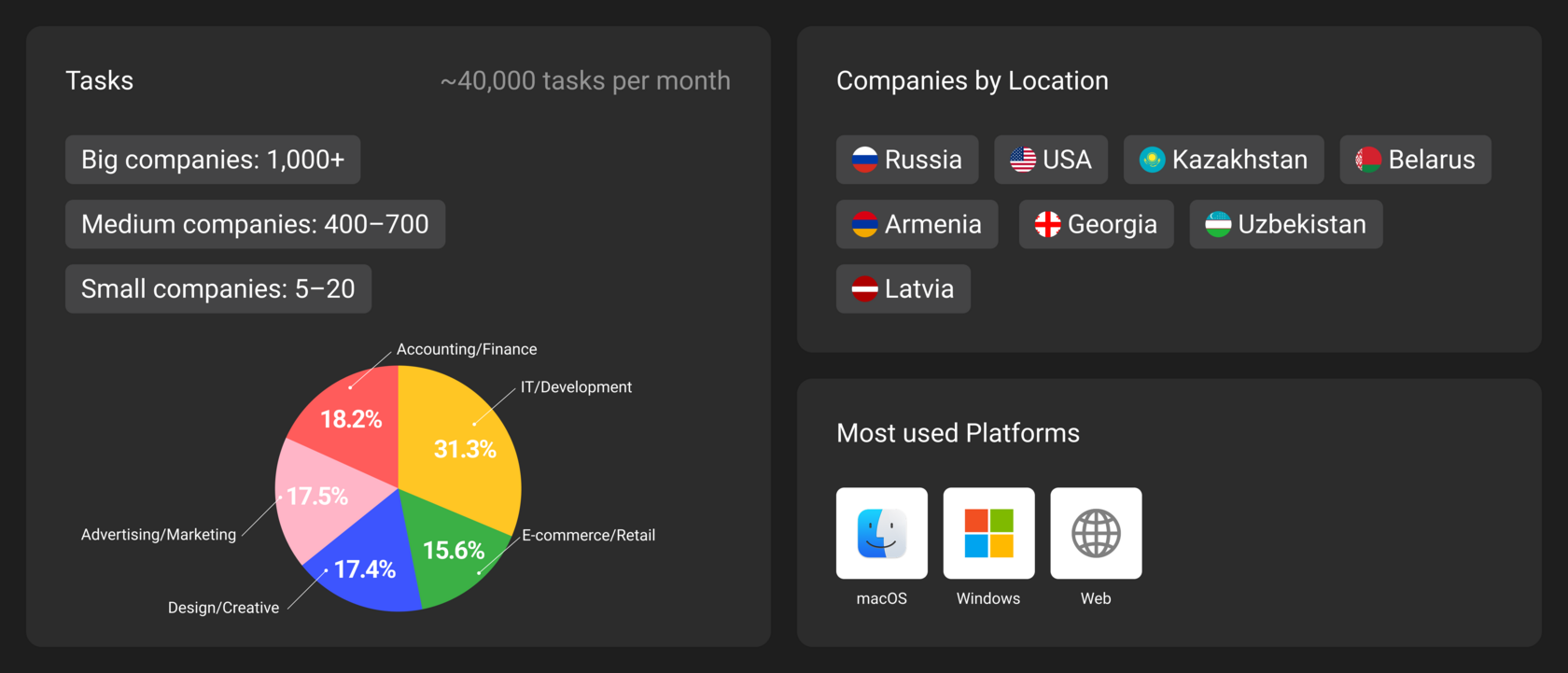
Conducted quantitative analysis of the customer base by country to assess localisation requirements and determine the need for additional language support. Evaluated operational workload metrics, including average tasks per month and the volume of companies managing multiple concurrent assignments, to understand dashboard complexity and scalability needs.
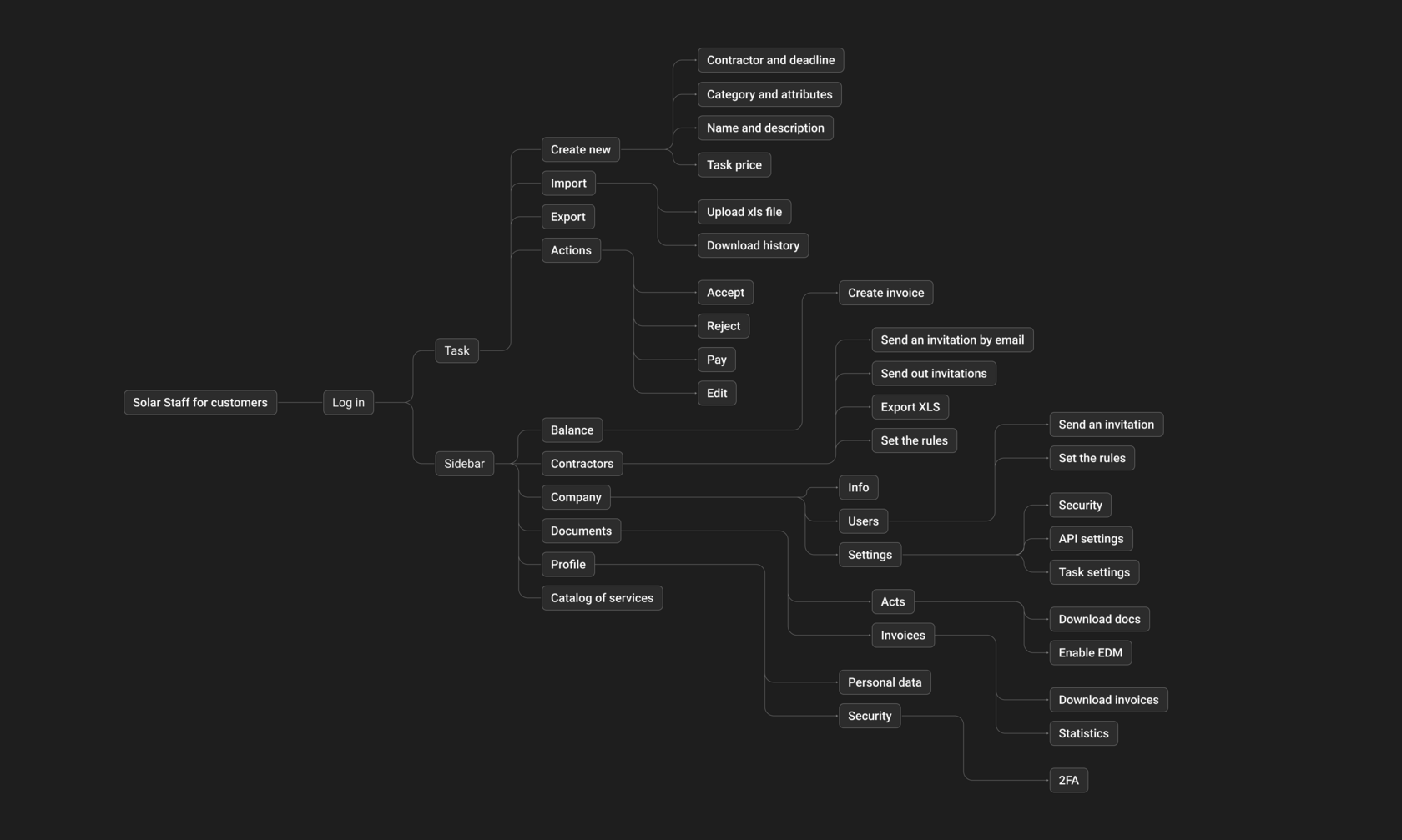
Complemented analytics with qualitative user interviews and structured feedback gathered from customer support to identify friction points and unmet needs. Developed an analytical framework of the customer dashboard experience to map scale, define priority areas, and plan a phased transformation strategy.
Conducted quantitative analysis of the customer base by country to assess localisation requirements and determine the need for additional language support. Evaluated operational workload metrics, including average tasks per month and the volume of companies managing multiple concurrent assignments, to understand dashboard complexity and scalability needs.
Complemented analytics with qualitative user interviews and structured feedback gathered from customer support to identify friction points and unmet needs. Developed an analytical framework of the customer dashboard experience to map scale, define priority areas, and plan a phased transformation strategy.
Design system
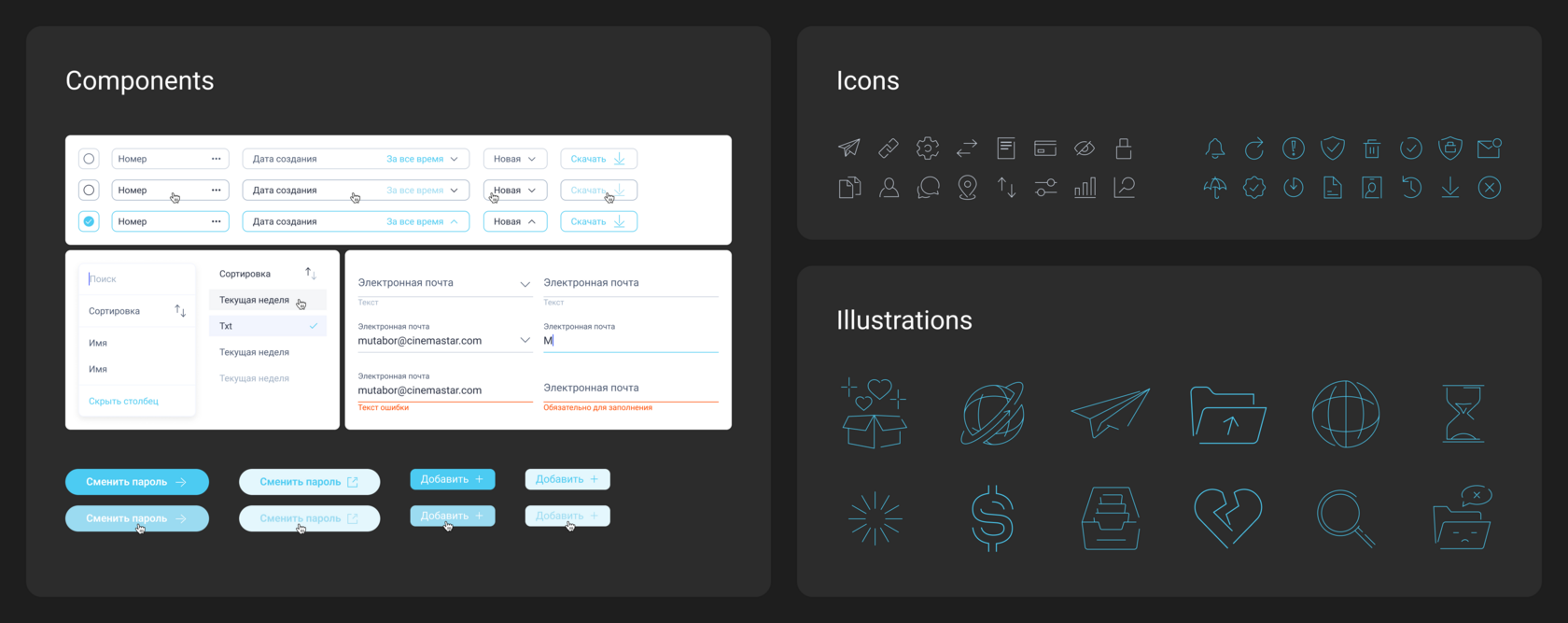
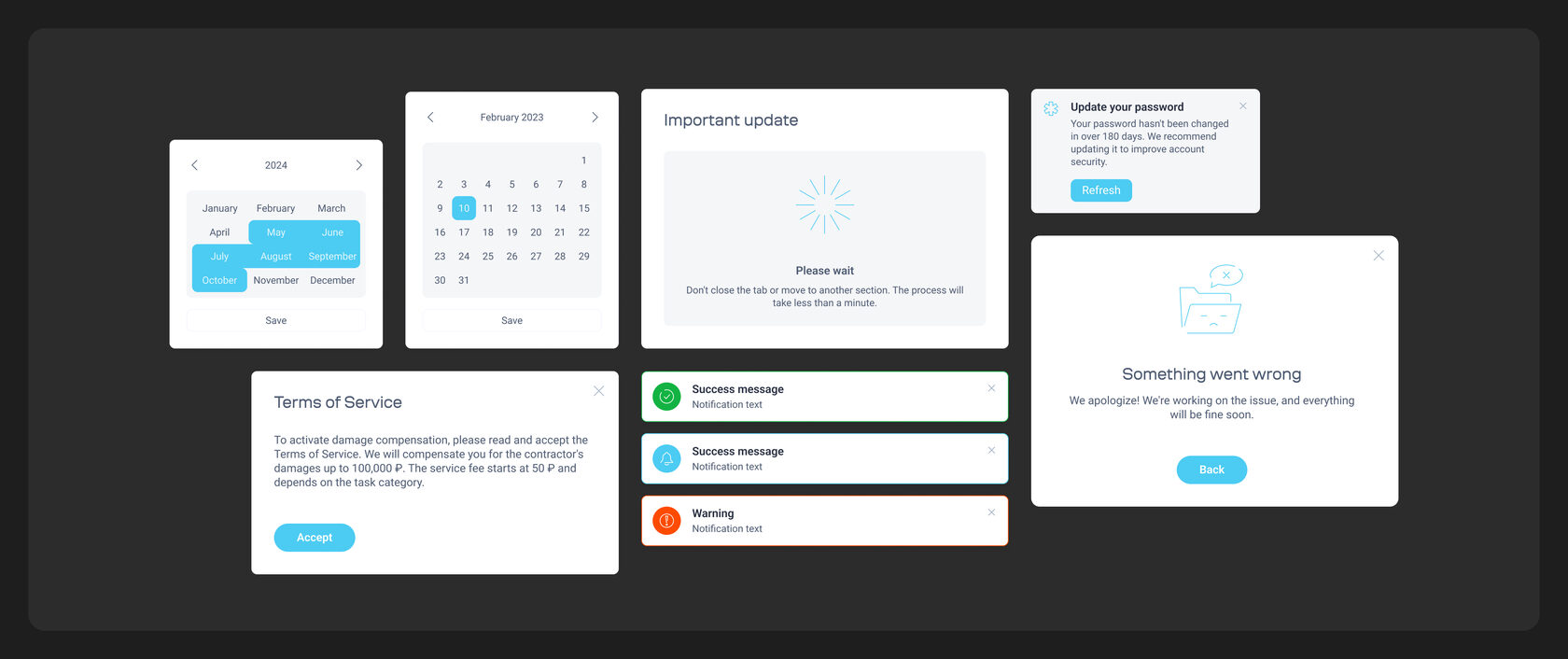
Established a scalable web design system, defining a structured library of reusable components, typography, colour tokens, and interaction patterns to ensure consistency across the customer platform.
Standardised visual language and UI behaviours to support complex operational workflows and reduce implementation discrepancies between design and engineering. Designed a cohesive set of illustrations and iconography aligned with the brand identity, strengthening visual clarity while maintaining a professional B2B tone.
Established a scalable web design system, defining a structured library of reusable components, typography, colour tokens, and interaction patterns to ensure consistency across the customer platform.
Standardised visual language and UI behaviours to support complex operational workflows and reduce implementation discrepancies between design and engineering. Designed a cohesive set of illustrations and iconography aligned with the brand identity, strengthening visual clarity while maintaining a professional B2B tone.
Registration and company onboarding
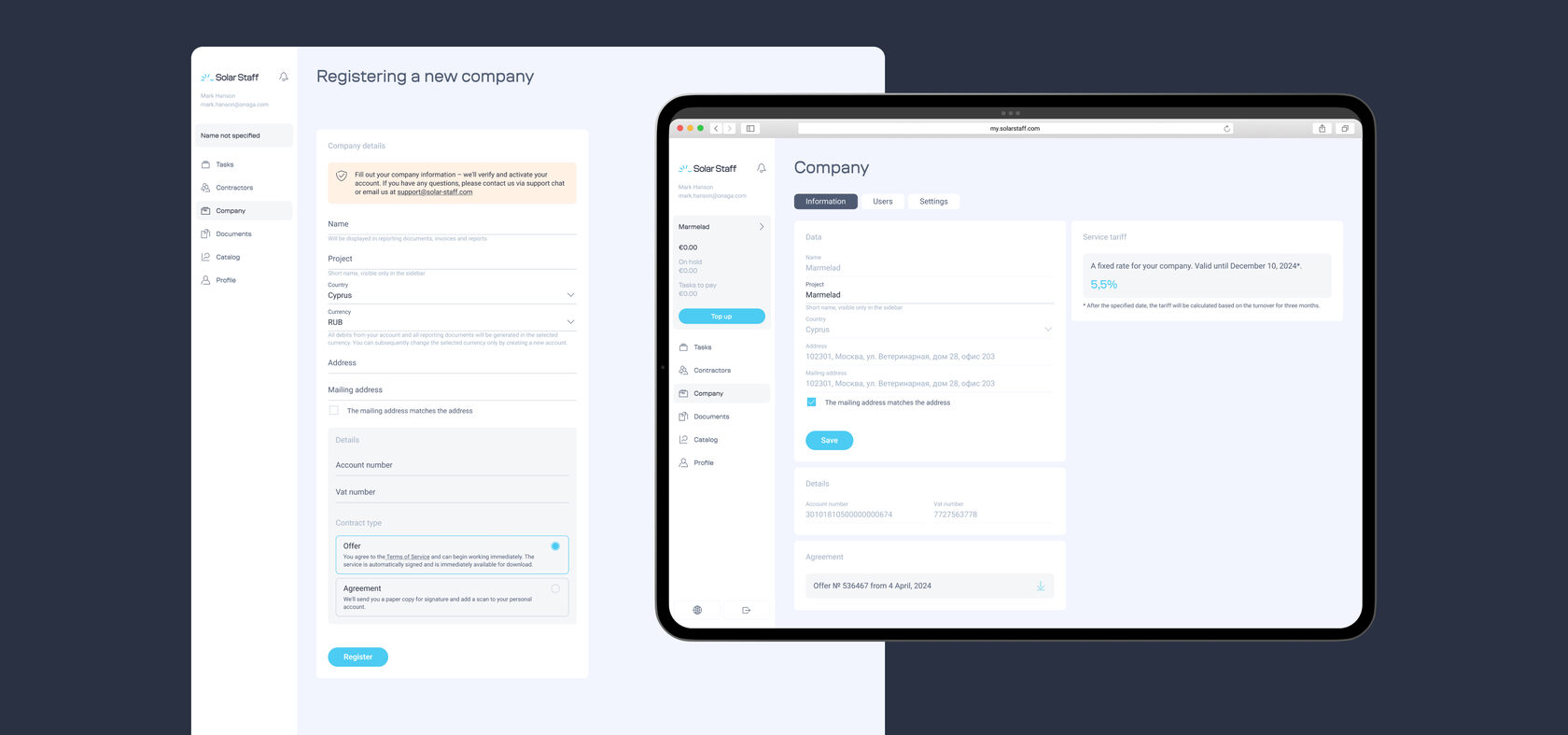
Redesigned the registration and company creation flow to simplify initial onboarding for business users and reduce friction during account setup. Clarified profile verification and account activation steps through improved visual hierarchy and contextual guidance, increasing transparency during compliance-related processes.
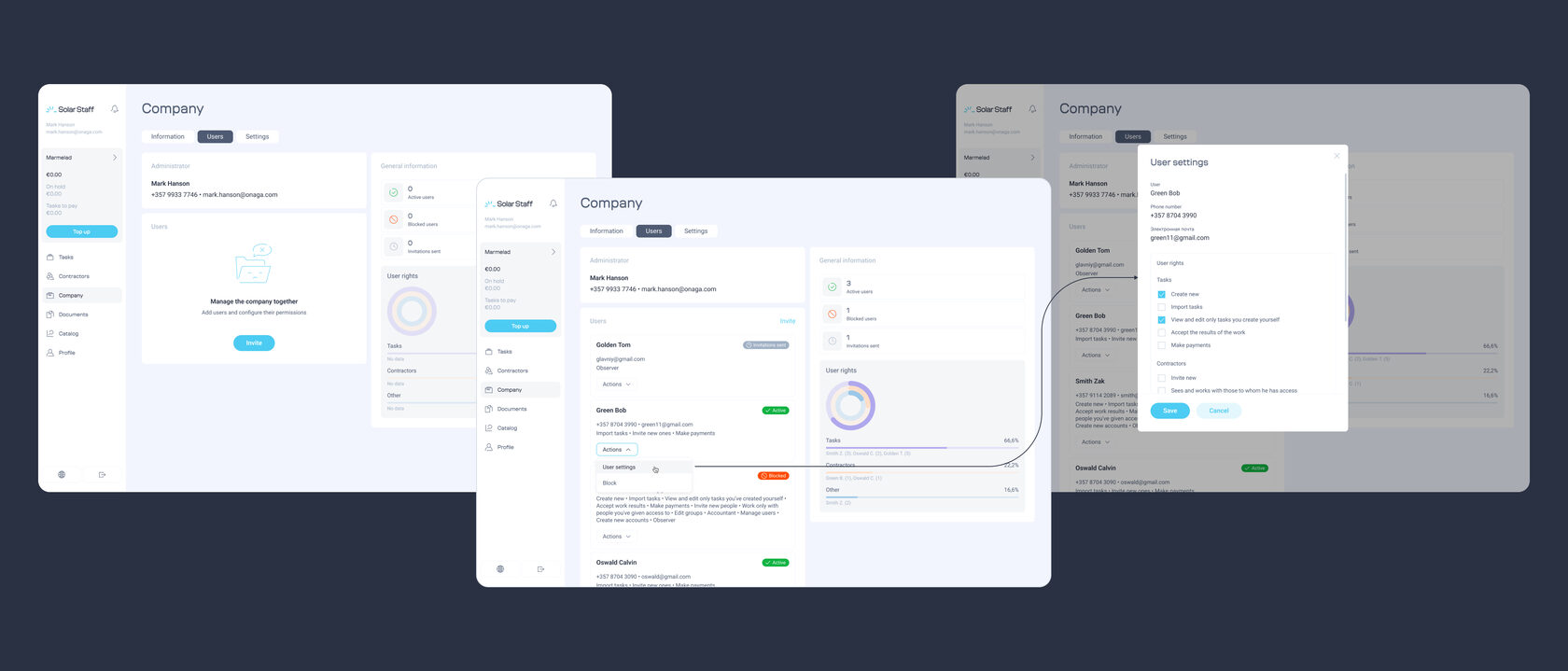
Reworked the Company management section to improve structural clarity and added a performance statistics dashboard to provide business users with real-time operational insights. Introduced concise and structured user information layouts, improving readability and decision-making within the management interface.
Redesigned the registration and company creation flow to simplify initial onboarding for business users and reduce friction during account setup. Clarified profile verification and account activation steps through improved visual hierarchy and contextual guidance, increasing transparency during compliance-related processes.
Reworked the Company management section to improve structural clarity and added a performance statistics dashboard to provide business users with real-time operational insights. Introduced concise and structured user information layouts, improving readability and decision-making within the management interface.
Task management optimisation
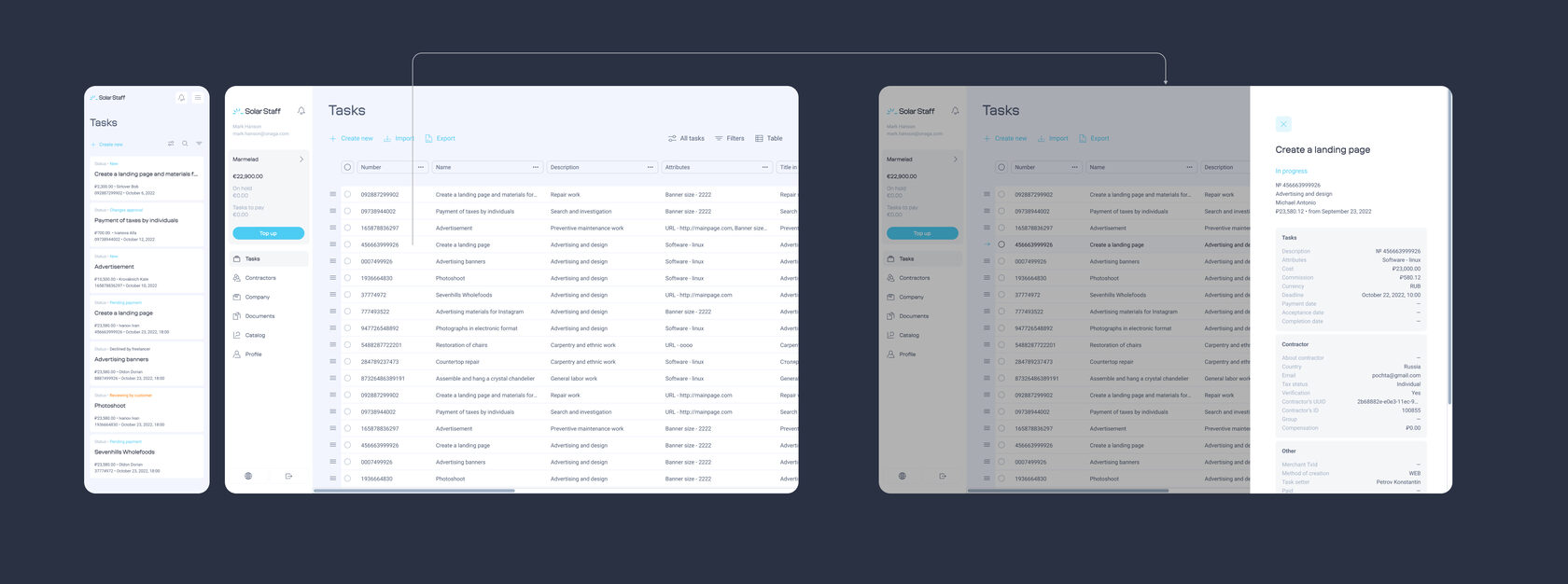
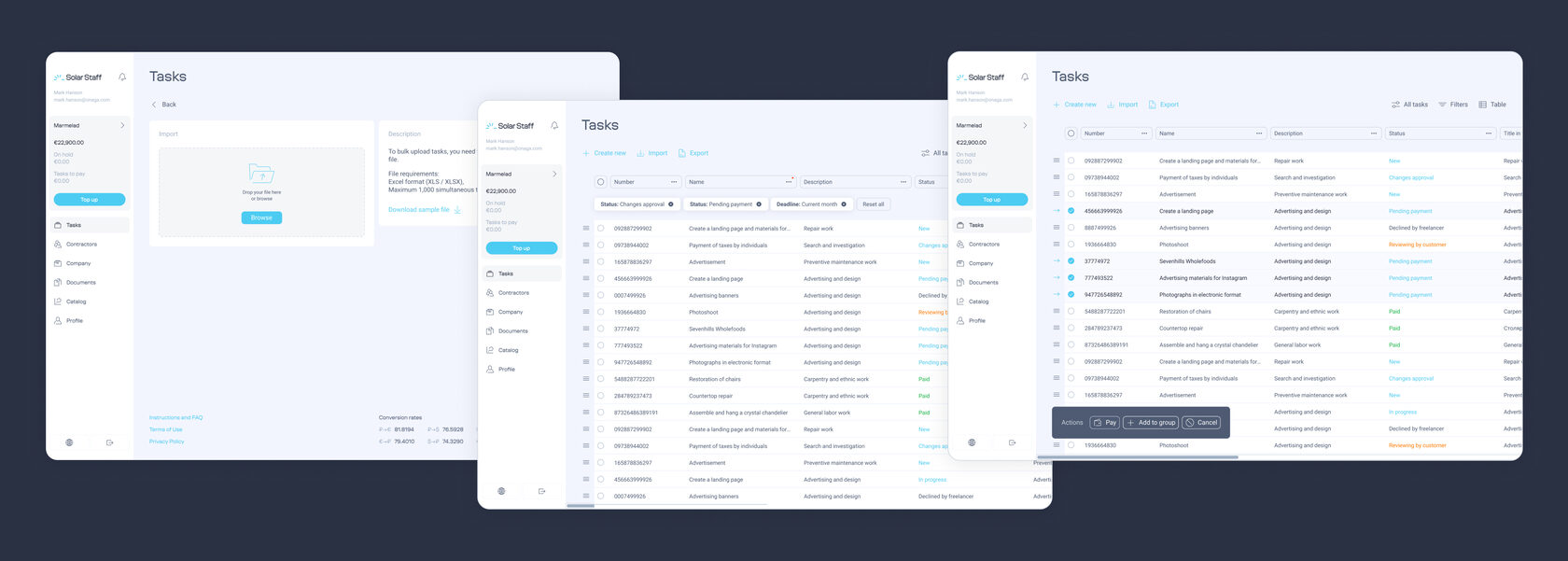
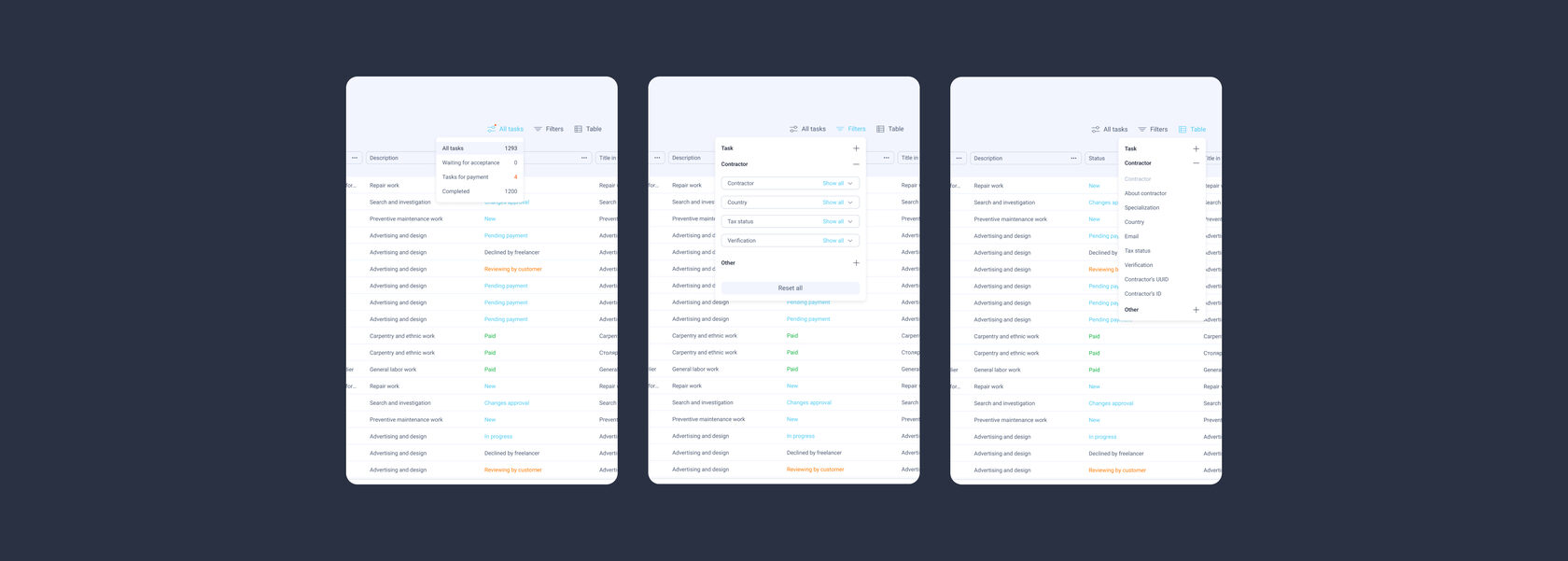
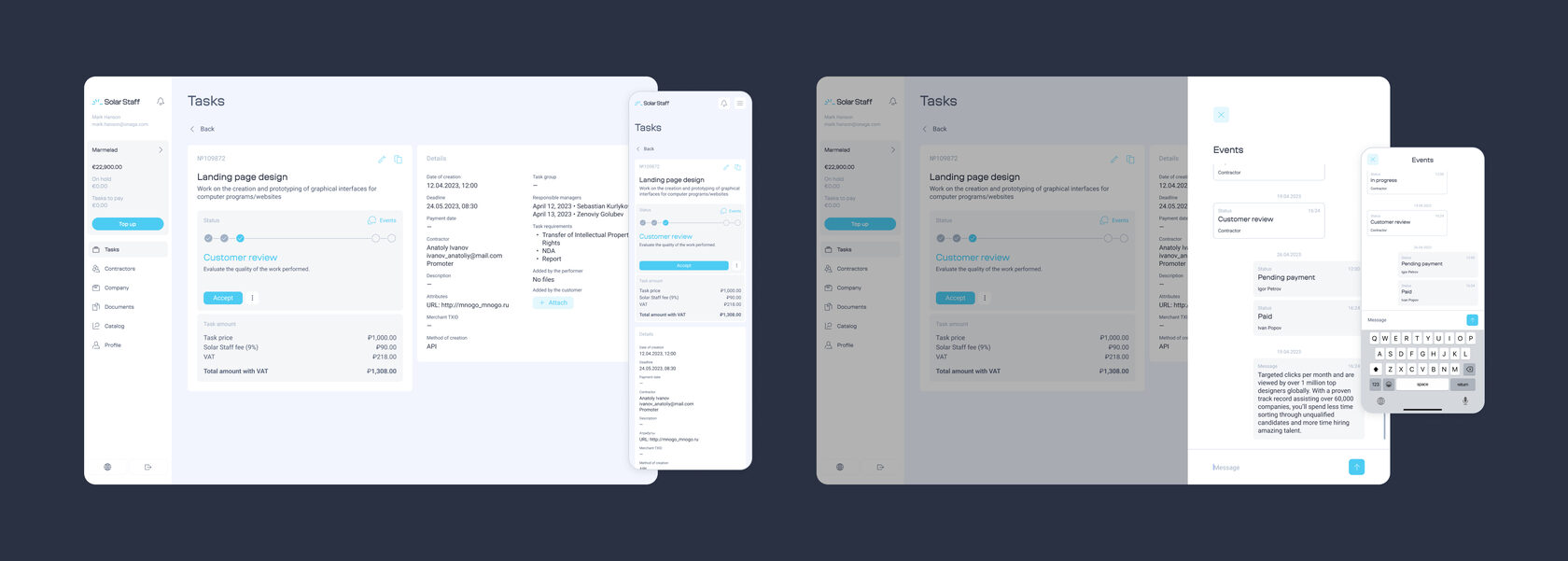
Redesigned the task management interface into a fully customisable data table, enabling users to control column visibility, apply sorting logic, and perform advanced search across operational workflows.
Introduced bulk selection and quick filtering for tasks requiring payment or approval, significantly improving efficiency for companies managing high task volumes. Implemented contextual action controls within a dedicated Actions panel, dynamically reflecting available status changes based on selected tasks to reduce errors and streamline execution. Enhanced row-level interaction by introducing expandable task views, allowing users to access detailed information without disrupting their primary workflow.
Redesigned the task management interface into a fully customisable data table, enabling users to control column visibility, apply sorting logic, and perform advanced search across operational workflows.
Introduced bulk selection and quick filtering for tasks requiring payment or approval, significantly improving efficiency for companies managing high task volumes. Implemented contextual action controls within a dedicated Actions panel, dynamically reflecting available status changes based on selected tasks to reduce errors and streamline execution. Enhanced row-level interaction by introducing expandable task views, allowing users to access detailed information without disrupting their primary workflow.
Balance Top up
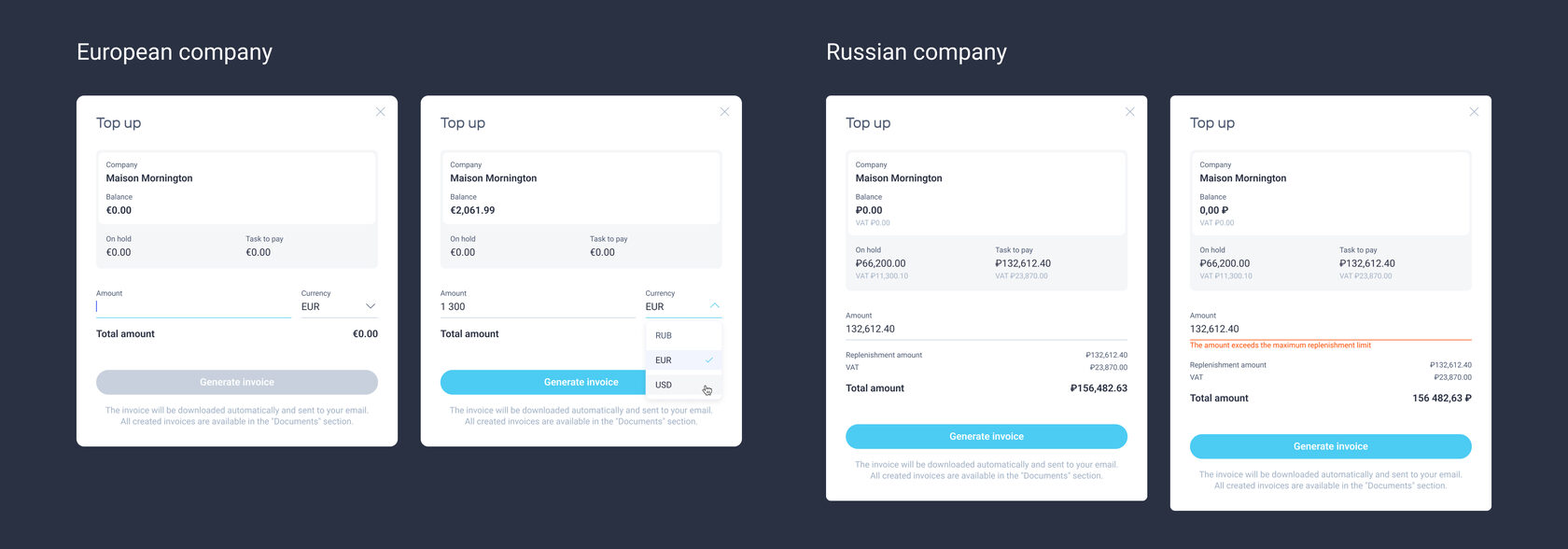
Redesigned the company balance top-up experience, enriching the invoice modal with structured financial information to improve transparency and reduce ambiguity during transactions.
Modularised the invoice interface into reusable components, ensuring consistency across financial flows and simplifying future feature development. Optimised amount entry and validation logic to improve clarity, minimise input errors, and enhance overall transaction confidence for business users.
Redesigned the company balance top-up experience, enriching the invoice modal with structured financial information to improve transparency and reduce ambiguity during transactions.
Modularised the invoice interface into reusable components, ensuring consistency across financial flows and simplifying future feature development. Optimised amount entry and validation logic to improve clarity, minimise input errors, and enhance overall transaction confidence for business users.
Documents and financial transparency
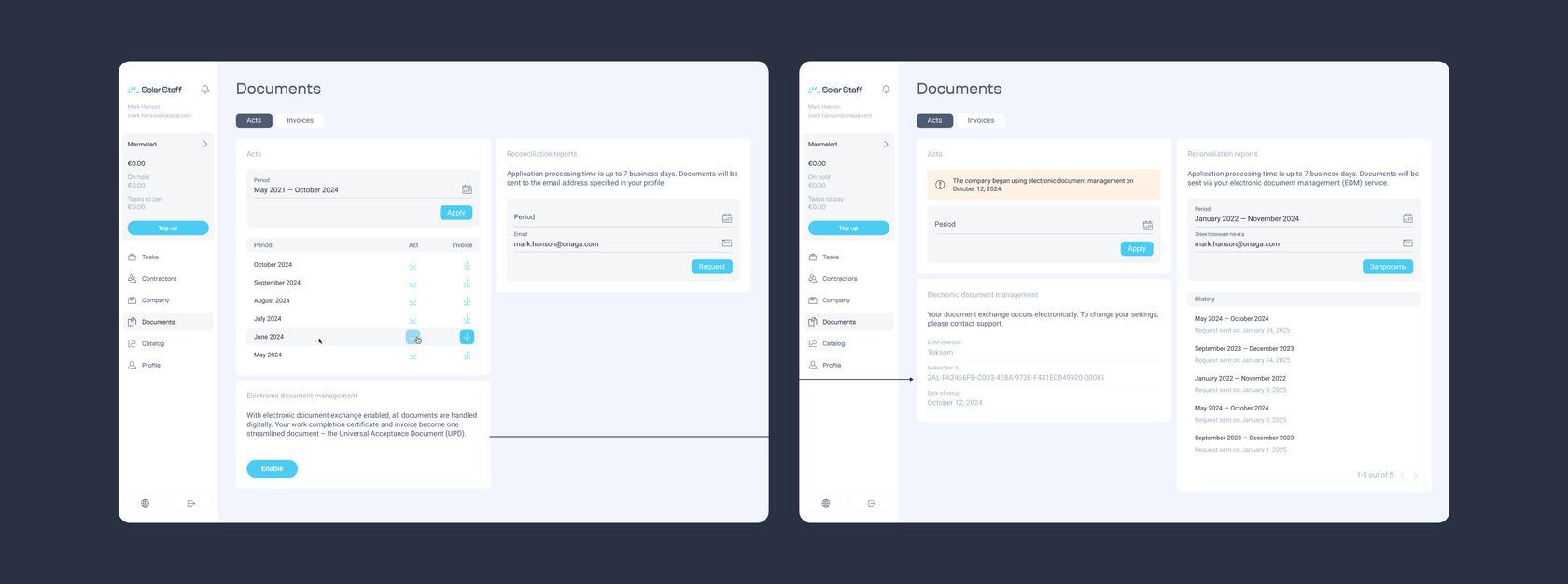
Redesigned the documents section to improve front-end presentation and structural clarity, enabling businesses to navigate financial records more efficiently.
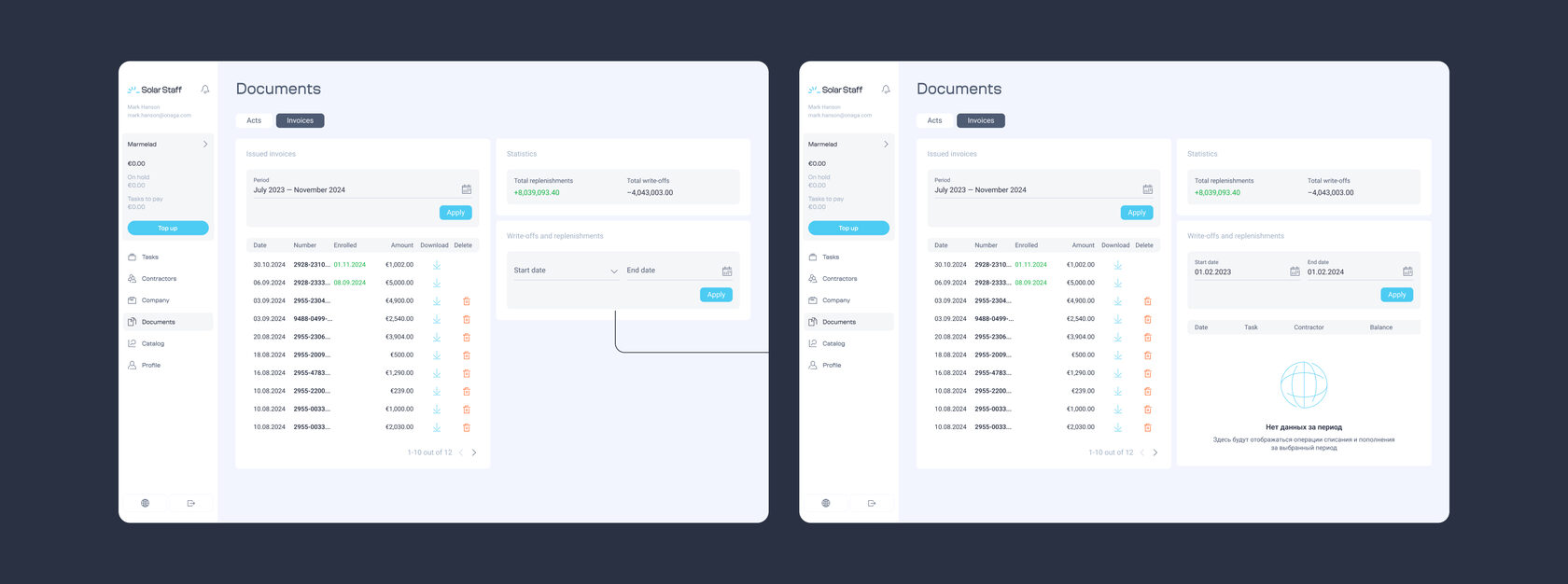
Consolidated invoice management into a single, unified area, reducing fragmentation and simplifying access to billing information.
Integrated financial statistics within the same section to provide contextual insights alongside documentation, improving visibility and decision-making for business users.
Redesigned the documents section to improve front-end presentation and structural clarity, enabling businesses to navigate financial records more efficiently.
Consolidated invoice management into a single, unified area, reducing fragmentation and simplifying access to billing information.
Integrated financial statistics within the same section to provide contextual insights alongside documentation, improving visibility and decision-making for business users.
Contractors Management
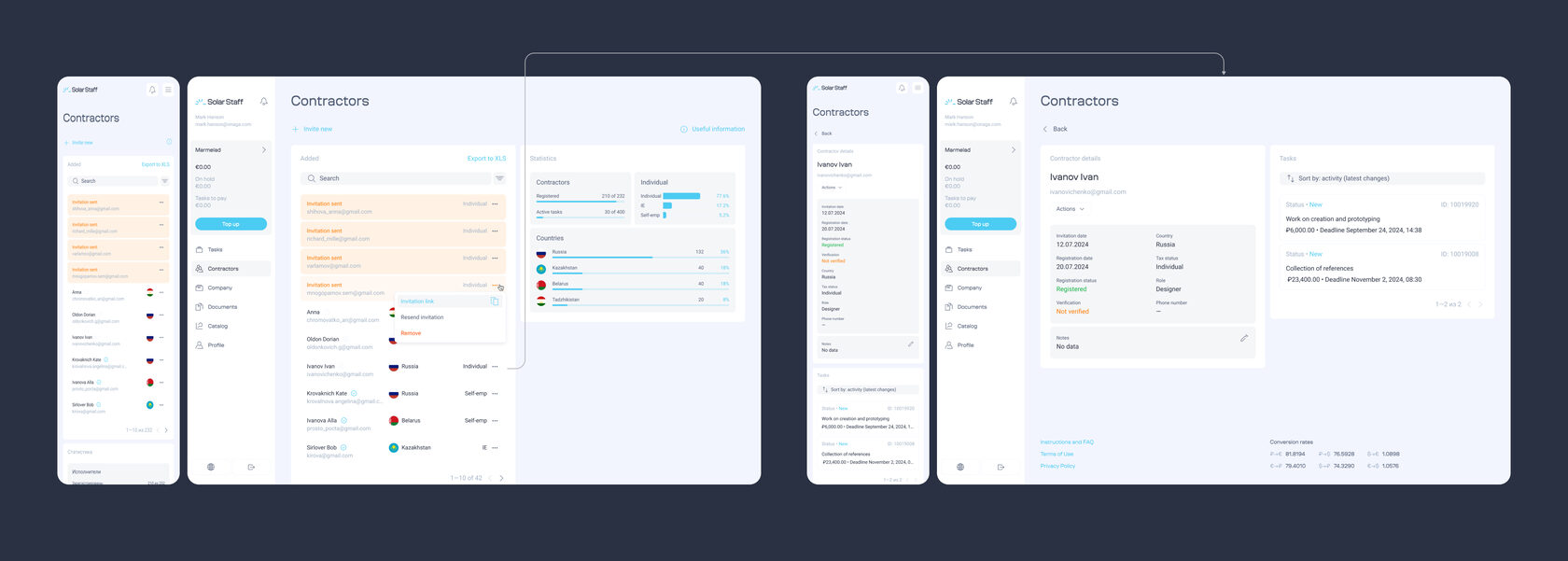
Redesigned the contractors overview to provide a compact and structured list view, improving clarity and enabling faster navigation across large volumes of performers. Introduced schematic summary information for each contractor, giving businesses a high-level operational snapshot of all collaborators within the platform.
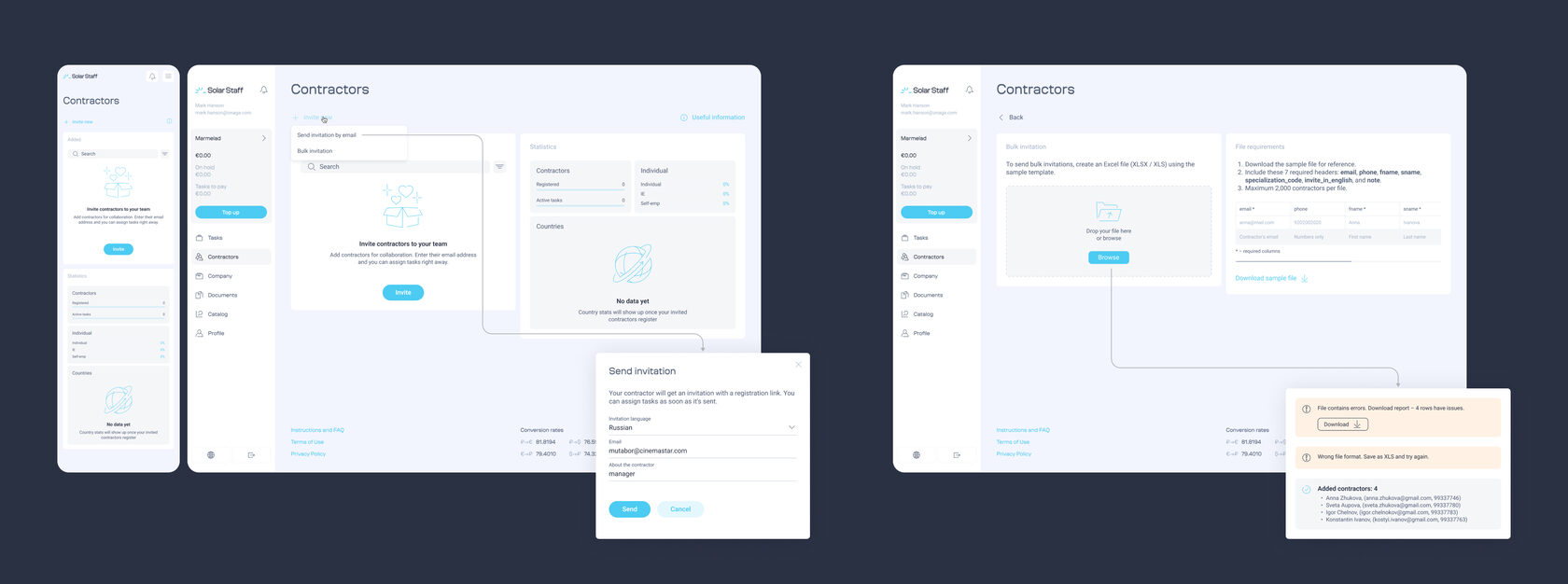
Optimised the contractor import flow with improved visual structure and contextual guidance, reducing onboarding friction and minimising data entry errors during bulk uploads.
Redesigned the contractors overview to provide a compact and structured list view, improving clarity and enabling faster navigation across large volumes of performers. Introduced schematic summary information for each contractor, giving businesses a high-level operational snapshot of all collaborators within the platform.
Optimised the contractor import flow with improved visual structure and contextual guidance, reducing onboarding friction and minimising data entry errors during bulk uploads.
Delivery and phased rollout
By the end of 2025, multiple core dashboard sections were successfully released to production, marking the first phase of the platform transformation. The redesign was delivered through a staged rollout strategy, with subsequent releases planned incrementally to minimise operational risk and ensure stable adoption among business users.
By the end of 2025, multiple core dashboard sections were successfully released to production, marking the first phase of the platform transformation. The redesign was delivered through a staged rollout strategy, with subsequent releases planned incrementally to minimise operational risk and ensure stable adoption among business users.
Key achievements
-
- Maintained a stable base of 1,200–1,300 monthly active business accounts (MAU) throughout 2025, demonstrating consistent platform adoption within a B2B operating model.
- Increased operational throughput to over 40,000 processed tasks per month, nearly doubling volume within the first quarter of 2025 and reinforcing the dashboard as a core workflow system.
- Recorded peak engagement exceeding 600,000 monthly logins during high-activity periods, reflecting strong product dependency among enterprise users.
- Generated 1.08 million annual visits and 421,000 unique web users, confirming scalable platform usage across customer accounts.
- Maintained high engagement quality, with users averaging nearly 4 page views per session and over 4 minutes per visit, indicating task-driven behaviour rather than passive browsing.
- Sustained a low bounce rate below 19%, signalling clear information architecture and strong intent alignment.
- Delivered the redesign through a phased transformation strategy, reducing operational risk while modernising a high-volume financial workflow system.
Next projects